

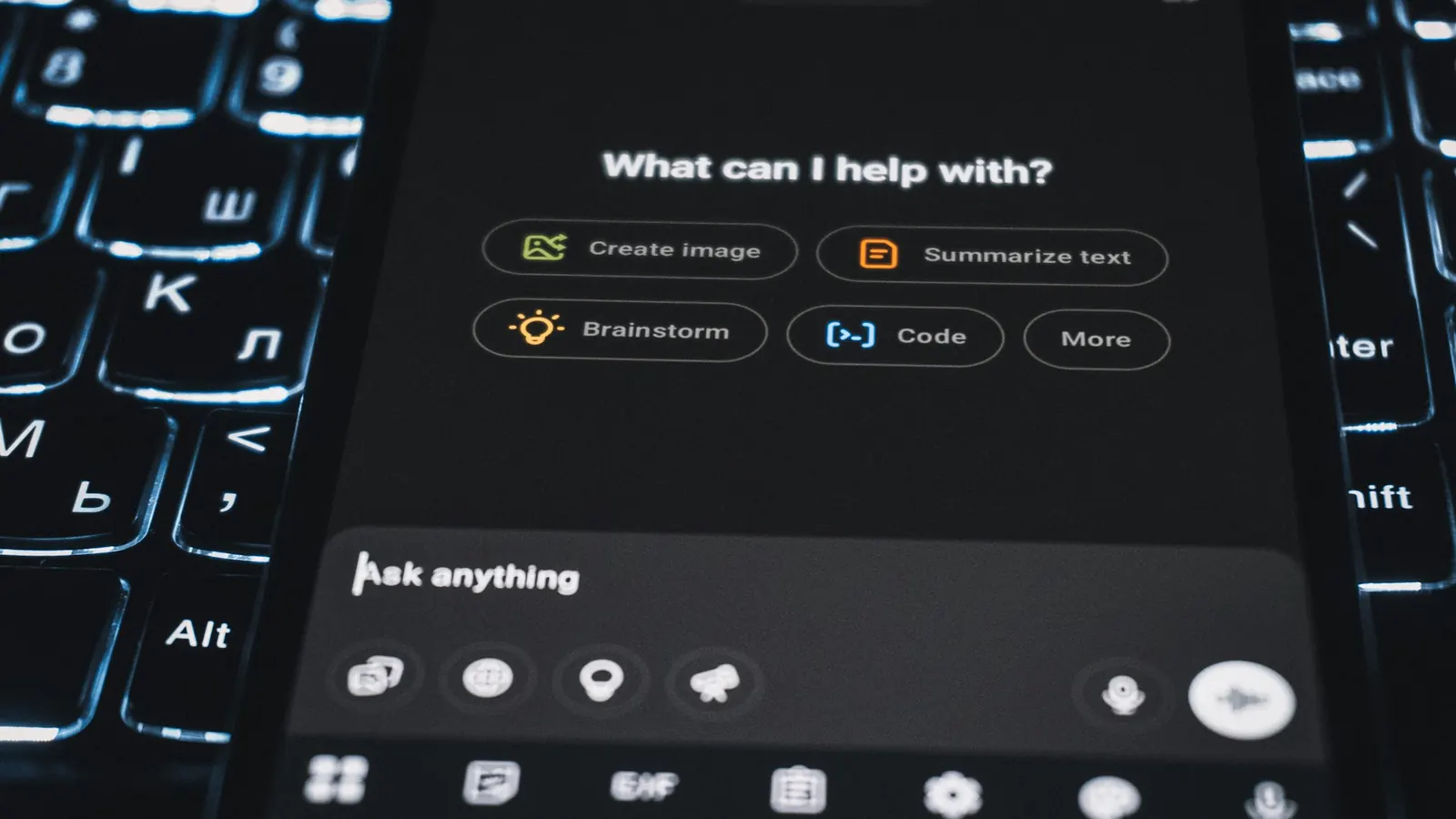
AEO, short for answer engine optimization, is the work of getting your pages quoted when someone asks a question and gets a written answer back instead of a list of links. The "answer engines" are Google's AI Overviews and AI Mode, ChatGPT search, Microsoft Copilot, Perplexity and voice assistants.
Most of it is ordinary SEO with sharper writing. Google says there are no extra requirements to appear in its AI features. Microsoft's Bing team has been more specific about how its systems pick passages, and their advice is practical enough to use on a small business site this week.
The short version
- Answer engines quote passages, not whole pages. Each section of a page should make sense on its own.
- Put the direct answer in the first sentence or two under a heading, then explain.
- A page has to be indexed and eligible for a snippet before Google can use it in AI Overviews.
- Allow OAI-SearchBot if you want to appear in ChatGPT search. Blocking GPTBot only opts you out of model training.
- Measure it in Search Console, in Bing Webmaster Tools' AI Performance report, and through AI referrals in your analytics.
AEO, SEO and GEO: what's the difference?
The labels overlap more than the people selling them admit. Here's how they're usually used:
| Term | What it aims for | Where it shows up |
|---|---|---|
| SEO (search engine optimization) | Ranking pages in the classic list of results | Google and Bing results pages |
| AEO (answer engine optimization) | Being the passage an engine uses to answer a question | AI Overviews, featured snippets, voice answers, chat answers |
| GEO (generative engine optimization) | Being cited or mentioned in AI-written answers | ChatGPT, Copilot, Perplexity, AI Mode |
In practice AEO and GEO are the same job with different names. Bing's own Webmaster Tools now uses the GEO label for its AI reporting. Whatever you call it, the work sits on top of SEO. A page that can't be crawled, indexed or trusted won't be quoted.
How do answer engines choose what to quote?
According to Google, AI Overviews and AI Mode may use a "query fan-out" technique: the system runs several related searches across subtopics, then pulls supporting pages from the results. So a page doesn't need to match the exact question. It needs to answer one of the smaller questions well. Google also says AI Overviews only appear when they add something to the normal results, so many searches never show one.
Microsoft describes something similar for Copilot. It breaks pages into smaller pieces (it calls this parsing), judges each piece for authority and relevance, and builds the answer from several sources. So if the best sentence on your page only makes sense after reading the three paragraphs above it, it's a weak candidate for quoting.
Write answer-first sections
Under each heading, answer the question in one or two sentences. Then add the detail, exceptions and examples. Here's the same section written two ways for an accounting firm's site:
| Hard to quote | Easy to quote |
|---|---|
| "Taxes can feel overwhelming, and at our firm we understand that every client is different. When it comes to estimated payments, timing matters, which is why we always recommend staying on top of your deadlines." | "Quarterly estimated tax payments for the 2026 tax year are due April 15, June 15 and September 15, 2026, and January 15, 2027. If a date falls on a weekend or holiday, the deadline moves to the next business day." |
The second version has the dates, the year and the exception, and it would still be correct if an engine lifted it on its own. That's the test we use: copy a paragraph into a blank document and ask whether it still answers something. Our guide to quarterly estimated taxes is written this way, if you want a longer example.
Habits we use when rewriting a client's pages:
- Use the words your customers use. If they ask "how much is an AC tune-up", don't title the section "Maintenance investment".
- Name the thing. "It" and "this" at the start of a section lose their meaning once the section is pulled out.
- Put numbers, dates, places and conditions in the sentence itself. Microsoft's guidance warns against claims like "next-gen" or "innovative" with nothing measurable behind them.
- Keep one main idea per paragraph. Long walls of text blur ideas together, and both people and parsers struggle with them.
Structure that machines can lift
Headings tell an answer engine where one idea ends and the next begins. Microsoft suggests question-style headings instead of vague ones like "Learn more", and says direct question-and-answer pairs can sometimes be lifted word for word. Lists and tables work well for steps and comparisons. Don't turn every line into a bullet, though. A page made only of bullets has nothing connecting them, and that context is often what makes an answer trustworthy.
Some formats hide your content from these systems. Microsoft calls out four:
- Important answers tucked inside tabs or accordions, which AI systems may not render.
- Core information only in PDFs, which lack the headings and metadata of a normal page.
- Key details only inside images, such as prices or opening hours in a graphic.
- Long unbroken blocks of text with no headings.
Your page title, meta description and main heading should agree with each other too. If the title promises a price guide and the heading says "Our services", the engine has to guess what the page is for. Our on-page SEO checklist covers titles and headings in detail.
The technical side
For Google, the rule is short: a page must be indexed and eligible to show with a snippet. There are no extra technical requirements, and Google says you don't need special AI files or special schema markup. If you've added nosnippet or max-snippet controls to a page, they limit what can appear in AI features as well.
For ChatGPT, OpenAI runs separate crawlers with separate jobs. OAI-SearchBot decides whether your site can appear in ChatGPT search answers. GPTBot collects content that may be used to train OpenAI's models. You can allow the first and block the second. OpenAI says robots.txt changes take about 24 hours to reach its search systems.
| Crawler | What it's for | If you block it |
|---|---|---|
| Googlebot | Google Search, including AI Overviews and AI Mode | You leave Google Search entirely |
| Google-Extended | Gemini training and grounding outside Search | AI Overviews are not affected |
| Bingbot | Bing results and Copilot answers | You disappear from Bing and Copilot |
| OAI-SearchBot | ChatGPT search answers | You won't be shown in ChatGPT search answers |
| GPTBot | Training OpenAI's models | ChatGPT search is not affected |
One trap we see often: a hosting firewall or security plugin that blocks "bots" in general. Google's guidance mentions checking your CDN and hosting setup as well as robots.txt, because a crawler blocked at the firewall never sees your robots file at all.
Structured data helps machines understand what a page is, but it has to match the text people can see. FAQ markup is a special case. Since August 2023 Google only shows FAQ rich results for well-known government and health sites. A clear question-and-answer section is still useful to readers and answer engines, but don't expect the old drop-down rich result from the markup. Our guide to schema markup explains which types are still worth adding.
How do you measure AEO?
No single report shows everything yet. We use four places:
- Google Search Console counts clicks and impressions from AI Overviews and AI Mode inside the normal Performance report, under the "Web" search type. It doesn't separate them out, so watch question-style searches over time. Our Search Console guide shows where to look.
- Bing Webmaster Tools added an AI Performance report in February 2026 (still labeled a public preview). It shows how often your pages are cited in Copilot and Bing's AI summaries, which URLs are cited, and sample "grounding queries" the AI used to find them.
- In Google Analytics, look for referral visits from chatgpt.com, perplexity.ai, copilot.microsoft.com and gemini.google.com. Our GA4 setup guide covers the reports.
- Once a month, ask the main tools the five questions your customers ask most and note who gets cited. Answers change a lot, so treat it as a trend, not a score.
What we'd skip
Be wary of anyone promising guaranteed citations in ChatGPT. Microsoft's own guidance admits no formula guarantees inclusion, and Google notes that indexing and serving aren't guaranteed even when a page meets every requirement.
We'd also skip publishing dozens of near-identical AI-written pages to cover every question variation. Google's spam policies target scaled content made mainly to rank, and answer engines lean toward sources that add something original. An llms.txt file is cheap to add, but Google says you don't need new machine-readable files for its AI features, so it shouldn't come before the writing work.
If you're starting from zero, do the basics in our guide to showing up in AI search first, then rewrite your five most-visited pages answer-first. That's usually where the quickest gains are.
Official sources
- AI features and your website (Google Search Central)
- Creating helpful, reliable, people-first content (Google Search Central)
- Changes to HowTo and FAQ rich results (Google Search Central blog)
- Overview of OpenAI crawlers (OpenAI)
- Optimizing your content for inclusion in AI search answers (Microsoft)
- AI Performance in Bing Webmaster Tools (Bing Webmaster blog)
Frequently asked questions
Is AEO replacing SEO?
No. Answer engines pull from pages that are already crawled, indexed and trusted, so SEO is the foundation. AEO changes how you write and structure those pages so the best passages are easy to quote.
How long does AEO take to work?
For pages that already rank, a rewrite can show up in AI answers within weeks, once the page is recrawled. New pages take as long as normal SEO, often several months, because they have to be found and trusted first.
Does AEO matter for local businesses?
Yes, but local answers lean heavily on business listings and reviews. Keep your Google Business Profile and Bing Places listing complete, with the same name, address, phone number and hours as your website.
Do I need FAQ schema for AEO?
It isn't required. Google says no special schema is needed for its AI features, and FAQ rich results now only show for well-known government and health sites. A visible question-and-answer section on the page does more good than the markup on its own.
Want to know which of your pages get quoted?
Our SEO team checks how your business shows up in Google, Bing and AI answers, then rewrites the pages that should be getting cited. You can start with a free website audit or book a call.
See it in practice · D2C / E-commerce
D2C brand 3.2x organic traffic in 6 months
Curious how your own site scores?
Run our free website audit. Simple report, about 10 seconds, no sign-up.