

Part of our guide: US small business tax: the complete guide for owners and freelancers ›
When you're employed, tax comes out of every paycheck and you barely think about it. When you work for yourself, nobody withholds anything, so the IRS asks you to pay as you go through quarterly estimated taxes. Miss them and you can face an underpayment penalty, plus one very large bill in April. Get them right and tax season becomes far less stressful.
The short version
- You generally need to pay estimated taxes if you expect to owe $1,000 or more in federal tax for the year after withholding and credits.
- They cover both income tax and self-employment tax.
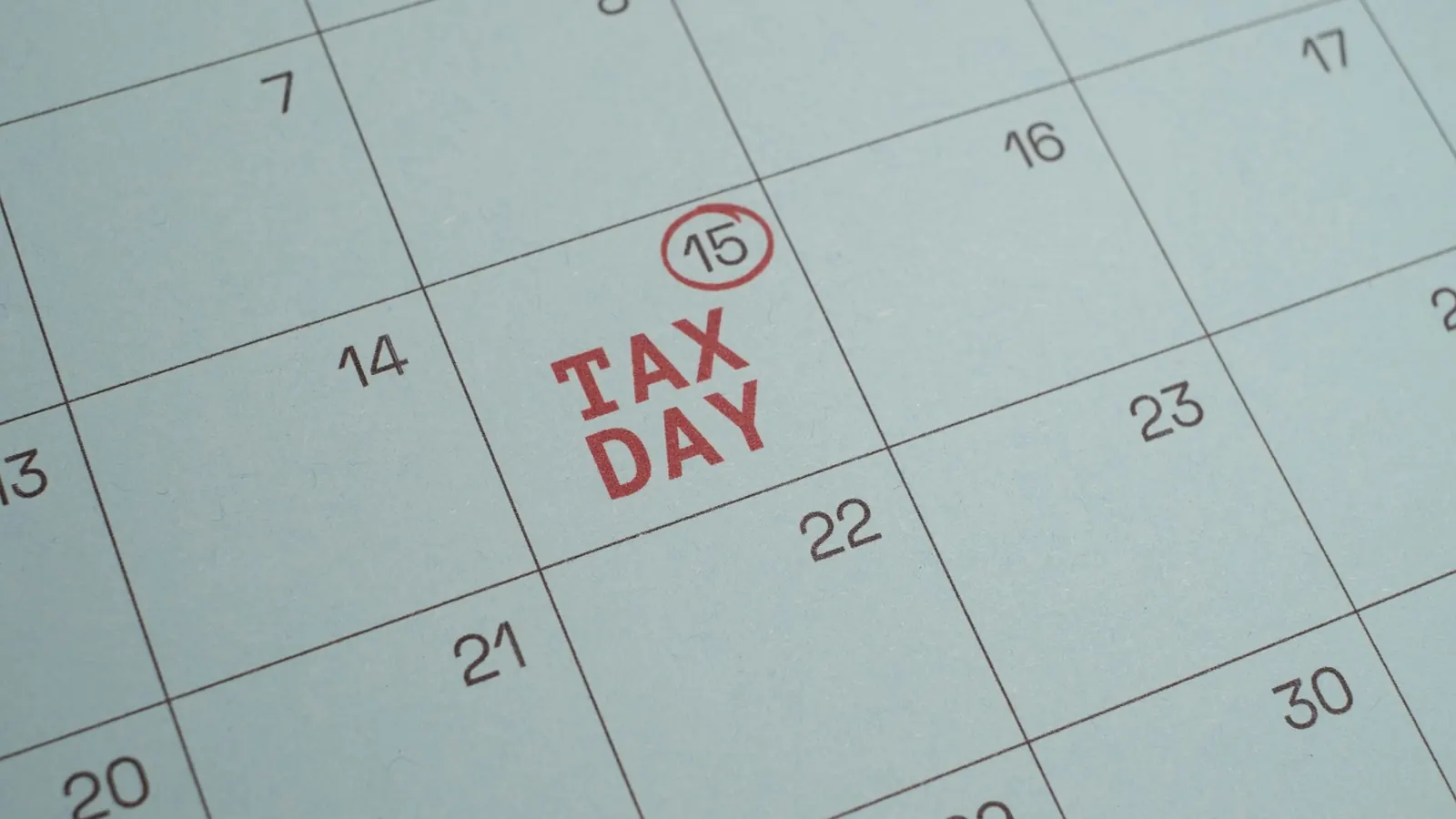
- The four payments are due around April 15, June 15, September 15 and January 15.
- You avoid penalties if you pay at least 90% of this year's tax or 100% of last year's (110% if your income was over $150,000).
- Most states with an income tax have their own estimated tax system too.
Who has to pay
Estimated taxes apply to income that doesn't have tax withheld: self-employment and freelance income, pass-through profit from an LLC, partnership or S corporation, and sometimes interest, dividends, rent or capital gains. If you also have a job, the tax withheld from your salary counts towards what you owe, and you can increase withholding instead of making estimated payments.
C corporations make estimated payments too, under separate rules, if they expect to owe $500 or more.
The due dates
| Payment | Covers income earned | Due |
|---|---|---|
| 1 | January 1 to March 31 | April 15 |
| 2 | April 1 to May 31 | June 15 |
| 3 | June 1 to August 31 | September 15 |
| 4 | September 1 to December 31 | January 15 of the following year |
The "quarters" aren't equal: the second covers only two months and the fourth covers four. If a date falls on a weekend or holiday, it moves to the next business day.
How to work out each payment
Method 1: base it on last year
The simplest approach is to take last year's total federal tax, from your previous return, and divide it into four equal payments. If last year's adjusted gross income was over $150,000, use 110% of last year's tax. As long as you pay these amounts on time, you won't owe an underpayment penalty, even if this year's bill turns out higher. You'll just pay the difference in April.
Method 2: estimate this year
If your income is falling, paying based on last year means paying too much in advance. Instead, estimate this year's profit, work out the income tax and self-employment tax on it, and pay a quarter each time. You need to pay at least 90% of this year's actual tax to be safe, so it's worth updating the estimate each quarter. Form 1040-ES includes a worksheet.
Method 3: annualized income
If your income is lumpy, such as a seasonal business or a big contract late in the year, the annualized income method lets you pay based on what you actually earned in each period. It takes more work and is calculated on Form 2210, but it avoids paying tax early on income you haven't earned yet.
A worked example
Maria is a freelance designer. Her total federal tax last year, including self-employment tax, was $14,000, and her adjusted gross income was under $150,000. This year she expects to earn more.
- Using the safe-harbor method, she pays $3,500 on each of the four due dates: $14,000 in total.
- Her actual tax for the year turns out to be $17,500.
- She pays the remaining $3,500 when she files in April, with no underpayment penalty, because she paid 100% of last year's tax on time.
Our self-employment tax calculator helps estimate the self-employment part of the bill.
How to pay
- IRS Direct Pay: free bank transfers from IRS.gov, no registration needed.
- Your IRS online account, which also shows payments you've made.
- EFTPS, the Electronic Federal Tax Payment System, useful if you also pay payroll taxes.
- Debit or credit card through approved processors, for a fee.
- Check or money order with a Form 1040-ES voucher.
Penalties
The underpayment penalty works like interest: it's calculated on the amount you underpaid for each period, for the number of days it was late, at the IRS's current interest rate. Paying the full year in January doesn't erase penalties for the earlier quarters. The IRS's page on estimated taxes explains the exceptions, including for casualty or disaster situations.
If you missed a payment
Pay as soon as you can. The penalty is worked out by the day, so paying a few weeks late costs far less than waiting until April. Then catch up on the next due date by paying that quarter's amount plus anything you're still short. When you file, Form 2210 works out any penalty, and in some cases, such as a first-time penalty or a disaster, you can ask the IRS to waive it.
Don't forget your state
Most states with an income tax also expect estimated payments, often on the same dates and with similar safe-harbor rules, though thresholds vary. Check your state tax agency's website, and include state payments in your budget.
Habits that make it easy
- Move 25% to 30% of every payment you receive into a separate tax savings account.
- Put all four federal and state dates in your calendar at the start of the year.
- Review your profit each quarter from your bookkeeping and adjust if it's changed a lot. Our bookkeeping basics guide shows how to keep it current.
- Keep confirmations of every payment with your tax records.
Official sources
Frequently asked questions
Do I need to pay estimated taxes in my first year of business?
If you had no tax liability last year, or weren't required to file, you generally won't owe a penalty for underpaying in your first year. You'll still owe the full tax in April, so it's wise to pay estimates anyway.
Can I pay all my estimated tax at once?
You can pay early, such as the whole year's amount in April. Paying late in the year doesn't fix penalties for earlier quarters.
What if I overpay?
Any overpayment is refunded when you file, or you can apply it to next year's first estimated payment.
Do S corp owners pay estimated taxes?
Often, yes. Their salary has tax withheld through payroll, but tax on their share of the profit usually isn't covered, so many make estimated payments or increase their withholding. See LLC vs S corp for how S corp pay works.
Want your estimates worked out for you?
Our business tax services team calculates your quarterly payments from up-to-date books and reminds you before each date. See our US small business tax guide, or book a call.
See it in practice · Healthcare
Healthcare practice scaled bookkeeping across 12 locations
Curious how your own site scores?
Run our free website audit. Simple report, about 10 seconds, no sign-up.


